Tinnitus Sound Therapy: What It Is and How to Try It
Tinnitus sound therapy uses soft sound to make ringing less noticeable. See how it works, what to listen to, how loud to keep it, and how to start tonight.
By Synra Editorial Team · Updated · 7 min read
The evening news ends. You turn down the lamp. In the quiet, the ringing steps forward, as if someone turned it up. You did not change a thing. The room just stopped covering it.
Tinnitus sound therapy means using soft, steady sound to make the ringing less noticeable. That sound can be a fan, gentle music, rain, a bedside sound machine or a phone app. The NIDCD says it may help by masking the ringing, helping you grow used to it, or distracting you.
Tinnitus masker
Sound is made on your device. Nothing to install.
Start quiet. Raise the level until the ringing just starts to blend in (the “mixing point”), not until it disappears. Keep the volume comfortable, especially with headphones.
What is tinnitus sound therapy?
Sound therapy is also called sound enrichment. Tinnitus UK says its aim is to change how you notice your tinnitus, or how you react to it. It describes it as safe, often free or cheap, and worth trying in different forms.
The American Tinnitus Association defines it as pleasant or calming sounds that lessen the presence of tinnitus. It adds a simple idea about attention. You can only focus on so much at once, so an outside sound can pull some of your attention away from the ringing.
Nothing about it is hard. You do not need special skills, only a sound you like and a little patience.
How does it work?
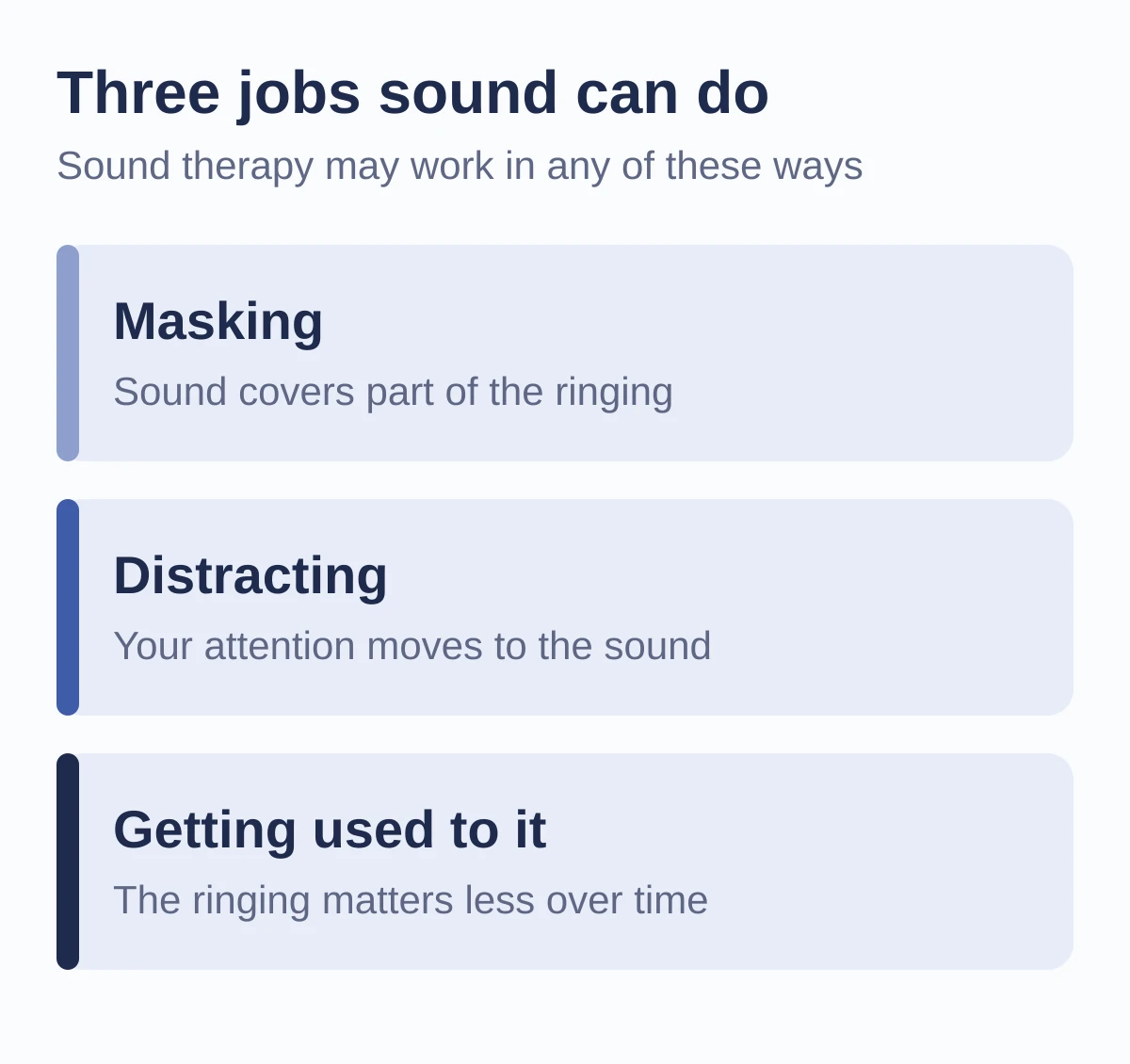
The NIDCD names three ways that sound may help. It can mask the ringing, which means covering part of it (see our guide to tinnitus masking). It can distract you. And it can help you grow accustomed to the sound, so it matters less over time.
Tinnitus UK describes two main ideas. One is that sound changes how sensitive the hearing parts of the brain are. The other is that it works as a distraction and a way to relax. It may be a bit of both.
You do not need to know which one is at work for you. If the ringing feels less pressing when your sound is on, it is doing its job.
What does the research say?
The 2014 AAO-HNSF tinnitus guideline, as summarised by American Family Physician, says sound therapy "can provide a sense of relief and be a distraction" and may be recommended for bothersome tinnitus. It lists everyday devices such as phones and radios as ways to do it.
Harvard Health says research suggests sound therapy can suppress tinnitus in some people. It also notes that things that suit one person may not suit the next, so trying a few sounds is part of the process.
One study followed people who listened to a personalised broadband noise for an hour a day. Eighty of the 83 people who finished reported some relief over four months. Their average tinnitus handicap score fell from 50 to 27. The authors point out that it was a small study with no comparison group, and that about 30% of people dropped out. So it is encouraging, not final.
The takeaway for you is practical. Sound is low-risk, easy to try and widely recommended. Your own ears are the best test.
Which sounds can you use?
You have more choices than you might think. The NIDCD says tabletop and phone sound generators are often used for relaxation or sleep. It also lists a radio or household fan. The NHS says soft music or sounds may distract you from the ringing, and to avoid total silence.
| Sound source | Cost | Good for |
|---|---|---|
| Fan, radio, ticking clock, open window | Free | Quick first try at home |
| Soft music or nature sounds | Free or low | Evenings, relaxing |
| White, pink or brown noise | Free or low | Steady cover for the ringing |
| Bedside sound machine with timer | Low to medium | Falling asleep |
| Phone app | Free or low | Anywhere, with a timer |
| Hearing aids or ear-level generators | Higher, fitted by a specialist | Daytime, if you also have hearing loss |
Tinnitus UK says hearing aids can help if you have any hearing loss, and that most people hear their tinnitus less when they wear them. Wearable sound generators are fitted by a tinnitus specialist. Both can be used alongside the simple options above.
If you are not sure where to start, our guide to what tinnitus sounds like matches high and low ringing to a sound to try first.
How loud should it be?
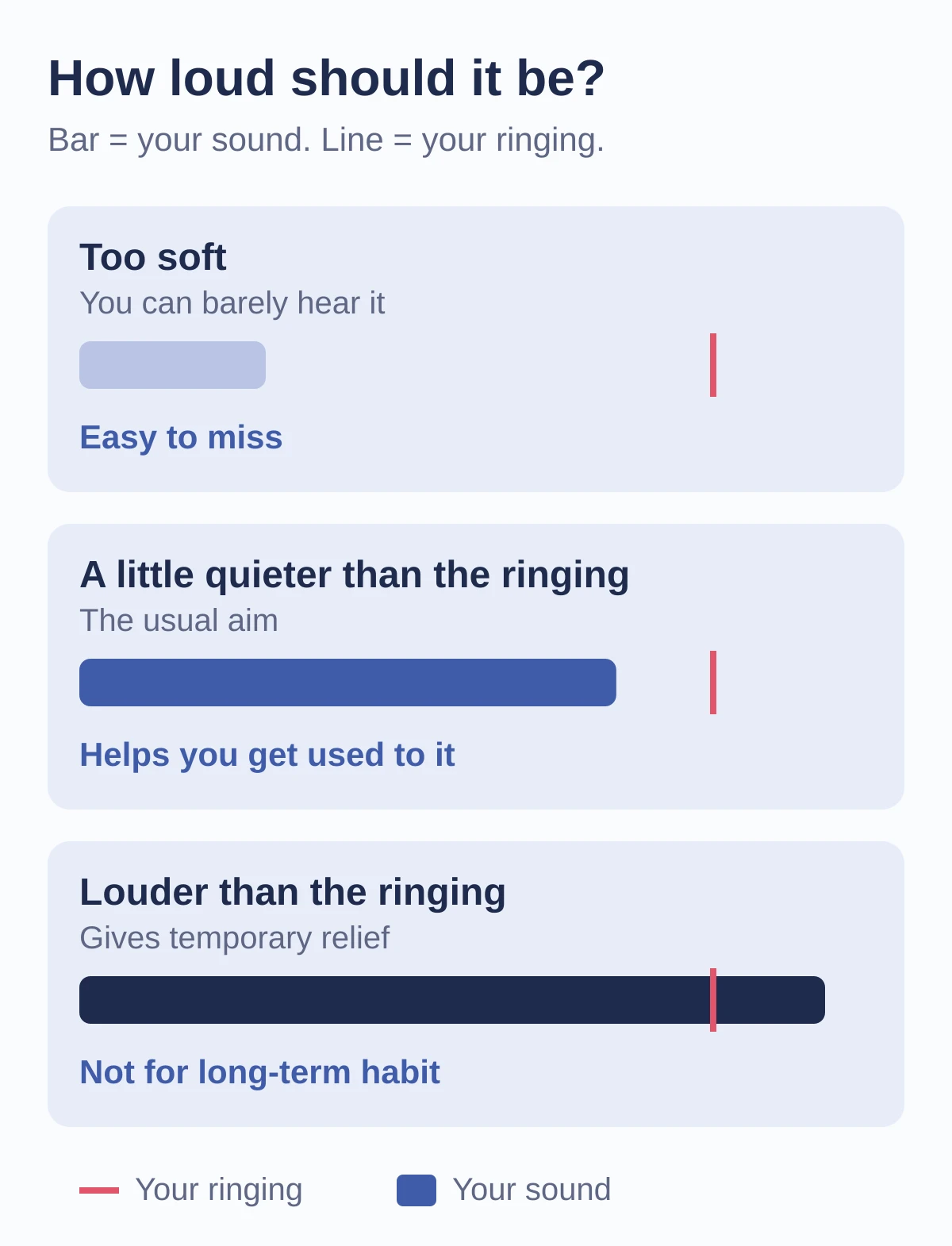
This is where many people go wrong, and it is worth a moment. Tinnitus UK suggests keeping the sound a little quieter than your tinnitus for most of the time. That level supports getting used to the ringing.
A louder sound can cover the ringing and bring quick, temporary relief. Tinnitus UK says it does not encourage getting used to it in the long run. The ringing can also seem louder when the sound stops.
Think of it as a background, not a wall. The ringing should blend in, not vanish under a roar. Always keep the volume comfortable for your ears.
Try it now with a simple test
The player on this page has brown, pink and white noise. Here is a quick way to find your sound.
- Play one noise at a low volume for two minutes.
- Ask yourself: is the ringing harder to pick out, and could I hear this for an hour?
- Try the next noise and compare.
- Keep the one that feels most comfortable. Our free online tinnitus masker lets you switch with one tap.
Many people find high ringing blends well with white or pink noise, and low humming with brown noise. It is a guide, not a rule. Our guide to white noise for tinnitus shows how to use the brightest of them gently.
When should you use sound?
Quiet moments are when the ringing is most noticeable, so that is when sound helps most. Tinnitus UK says a pleasant, low sound can help you fall asleep, or settle you again if you wake early. A timer is handy so it fades out as you drift off.
During the day, soft sound works well while you read, rest or do chores. Some people like it playing under a podcast or music.
Our guide on how to sleep with tinnitus walks through the night-time version step by step.
Sound therapy with other help
Sound pairs well with other things. The 2014 AAO-HNSF guideline also recommends cognitive behavioural therapy (CBT) for bothersome tinnitus. It advises a hearing aid assessment if you have trouble hearing. Relaxation, steady sleep habits and a calm evening routine all fit alongside sound.
The NHS describes tinnitus retraining therapy as using sound therapy to help your brain tune out the ringing and become less aware of it. It is done with a specialist, so ask your doctor if you would like to explore it.
How Synra can help with sound therapy
We built Synra for exactly these quiet moments. The Tinnitus Relief collection gives you brown, pink, green and white noise, plus rain and flowing-water sounds, so you can find the one that sits beside your ringing. A loudness slider keeps it soft, and frequency intensity settings let you shape the sound from Off to High. A timer of 10 to 60 minutes fades out gently, and the sound keeps playing with the screen off. With Backdrop Mode it plays quietly under a podcast or music. The result is a calmer room, and a ringing that stands out less. Not sure which sounds suit you? Take our free 1-minute tinnitus quiz and get sounds to try first.
When to see a doctor
Most tinnitus is not serious, but see a doctor if it:
- beats in time with your pulse (the NHS says to ask for an urgent GP appointment)
- started suddenly, or came with sudden hearing loss
- is in one ear only
- comes with dizziness, ear pain or discharge
- is bothering you, for example by affecting your sleep or concentration, or making you feel anxious or low
The NIDCD advises starting with your primary care doctor, who can refer you to an ear specialist. If you also notice hearing loss, a hearing test is a good next step.
A simple plan for this week
- Tonight, play one soft noise in the quiet hour before bed. Set it a little below your ringing.
- Tomorrow, try a different sound for two minutes each and keep your favourite.
- Add a 30-minute timer at bedtime so you can drift off to it.
- Through the day, use soft sound in quiet moments: reading, resting, a walk.
- After a week, note whether the ringing feels less noticeable. Tweak the sound or volume if not.
- Book a doctor visit if anything in the list above applies to you.
Browse all our tinnitus guides for more ideas.
Common questions
What is sound therapy for tinnitus?
It means using outside sound to change how you notice or react to the ringing. The sound can be a fan, soft music, nature sounds, a bedside sound machine or a phone app. Tinnitus UK describes it as sound used to alter your perception of tinnitus or your reaction to it.
Does sound therapy work for tinnitus?
Many people find it makes the ringing less noticeable, and the NIDCD says it may mask the sound, help you grow used to it, or distract you. The 2014 AAO-HNSF guideline says sound therapy may be recommended for bothersome tinnitus. Results differ from person to person, so it is worth trying a few sounds.
What sounds are best for tinnitus?
Common choices are white, pink and brown noise, rain, flowing water, a fan and soft music. The American Tinnitus Association lists several of these in its masking sound library. The best sound is the one that makes your ringing less noticeable and that you can happily hear for a long time.
How loud should tinnitus sound therapy be?
Tinnitus UK suggests a level a little quieter than your tinnitus for most of the time. A loud sound can give temporary relief, but it does not help you get used to the ringing in the long run. Keep it comfortable.
Can I use sound therapy all day?
Many people use soft sound through the day and at bedtime. The NHS advises not having total silence. Keep the volume low and take breaks for your ears. Ask your doctor or audiologist if you are unsure what suits you.
Sources (7)
- NIDCD (NIH): Tinnitus
- NHS: Tinnitus
- Tinnitus UK (British Tinnitus Association): Sound therapy
- American Tinnitus Association: Sound therapy
- American Family Physician: AAO-HNSF releases guideline on managing tinnitus
- Efficacy of sound therapy for tinnitus using an enriched acoustic environment with hearing-loss matched broadband noise (PMC)
- Harvard Health: Tinnitus, ringing or humming in your ears? Sound therapy is one option
More tinnitus guides
Which sounds suit your tinnitus? Take the free 1-minute quiz.
Free tinnitus quiz →Tinnitus quiz →