How to Sleep With Tinnitus: 9 Things That Actually Help
Tinnitus is loudest in a quiet bedroom. Nine simple, research-backed ways to fall asleep and stay asleep with ringing ears, starting tonight.
By Synra Editorial Team · Updated · 7 min read

You switch off the lamp. The house goes quiet. And there it is: the ringing, louder than it was all day.
You are not imagining it, and you are far from alone. Tinnitus is usually easiest to hear in silence, and a dark bedroom is the quietest place most of us spend time. The good news: what helps is mostly simple. Give your ears a soft, steady sound to listen to. Calm the stress that makes the ringing feel bigger. And protect your sleep routine.
Here are nine things that help, in the order most people try them. You can try the first one right now with the sound player below.
Tinnitus masker
Sound is made on your device. Nothing to install.
Start quiet. Raise the level until the ringing just starts to blend in (the “mixing point”), not until it disappears. Keep the volume comfortable, especially with headphones.
Why the ringing seems louder at night
Tinnitus means hearing a sound, like ringing, hissing, buzzing or humming, when nothing outside is making it. The NIDCD, part of the US National Institutes of Health, says it affects millions of adults. For some, it gets in the way of sleep.
At night, three things pile up:
- Nothing to cover it. In the day, traffic, voices and the fridge partly hide the ringing. At night, that background is gone.
- Nothing else to notice. Lying still, your brain has time to focus on the sound. The more you listen for it, the more you hear it.
- Worry. "Will I sleep tonight?" raises stress. Stress makes tinnitus feel more intrusive. Poor sleep then makes tomorrow's tinnitus feel worse.
Each tip below breaks one part of that circle.
1. Don't sleep in total silence
This is the change that helps most people first. Add a soft, steady sound to the bedroom. Experts call it sound enrichment or masking. The ringing now has something gentle around it, so it stands out less.
The US clinical guideline on tinnitus lists sound therapy as an option doctors may suggest.
To be honest about the research: a Cochrane review found no clear proof that sound devices make tinnitus itself quieter, and the studies were small. Where sound shines is the silence around the ringing. Fill that silence and the ringing has less to stand out against. That is what lets so many people finally relax and drift off. It is safe, gentle and easy to try tonight.
2. Pick a sound that blends with your ringing
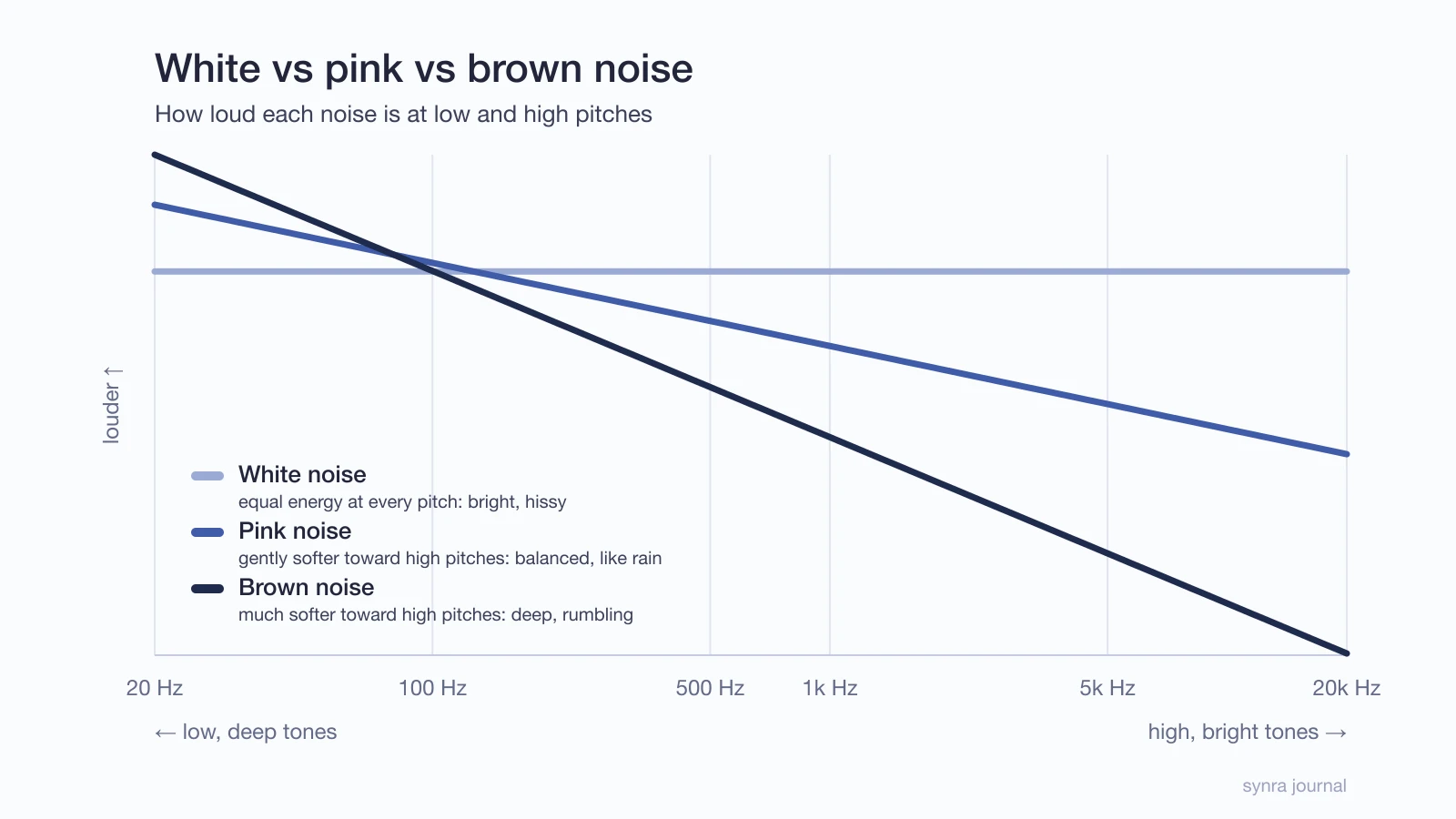
Different sounds suit different tinnitus. Start here:
| If your tinnitus sounds like… | Try first | Why |
|---|---|---|
| A high whistle or hiss | White or pink noise | More high tones, closer to the ringing |
| A low hum or roar | Brown noise | Deeper, rumbling tones |
| Hard to describe | Pink noise, rain or a fan | Soft and easy to listen to for hours |
Give each one a few minutes. The right sound is the one that makes the ringing hardest to pick out, and that you would be happy to fall asleep to. Our free online tinnitus masker lets you compare brown, pink and white noise with one tap.
3. Keep it soft: find the "mixing point"
It is tempting to turn the sound up until the ringing disappears. Most sound-therapy approaches suggest something gentler. Raise the volume until the ringing starts to blend in, but you can still faintly hear it. This is called the mixing point.
Why softer? It is more comfortable for a whole night. And staying close to the tinnitus, rather than burying it, is thought to help the brain file it away as unimportant background over time. Whatever you choose, it should never feel loud.
4. Choose how the sound reaches you
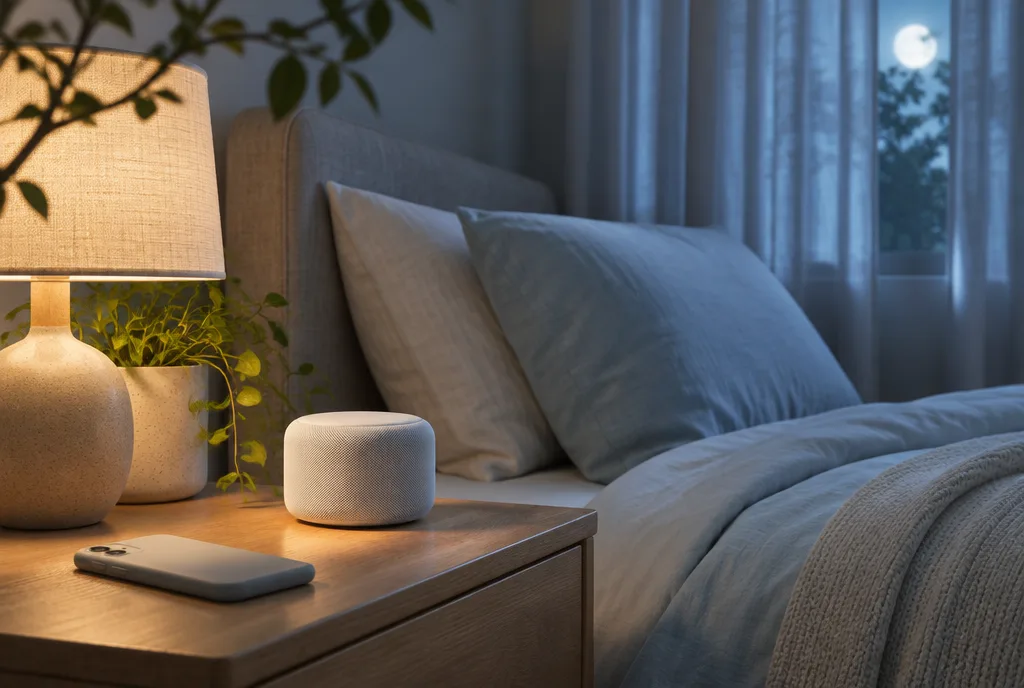
- A bedside speaker or sound machine. Comfortable and nothing in your ears.
- Your phone or tablet. Easy to change sounds and set a timer. Put it on the nightstand, not under your pillow.
- Soft sleep headphones. Handy if you share a bed. Keep the volume especially low.
5. Timer or all night?

If your trouble is falling asleep, a timer that fades the sound out after 30 to 60 minutes may be enough.
If you often wake at 3 a.m. and the ringing is the first thing you notice, leave the sound on all night. Then there is no sudden silence when you surface. Many people find this makes the biggest difference.
6. Give your evening a calm routine

A predictable last hour tells your body it is safe to switch off.
- Go to bed and get up at about the same time every day, weekends too.
- Dim the lights for the last hour. Put work and news away.
- Start your sound before you get into bed, so the room is never silent.
- Keep the bedroom cool, dark and comfortable.
7. Calm the stress, not just the ringing
Stress and tinnitus feed each other, so relaxing is part of sleeping well. Try breathing out more slowly than you breathe in, for a few minutes. Or tense and relax each muscle group, from your feet up. Calm music or a soft soundscape can help here too. Think of these as ways to relax at bedtime, not as tinnitus therapy.
One habit to drop: lying in bed checking how loud the ringing is tonight. Checking keeps your attention on it.
8. Watch caffeine, alcohol and late meals
The Sleep Foundation recommends good sleep habits for people with tinnitus:
- Keep coffee and tea to the morning and early afternoon.
- Go easy on alcohol. It can make you drowsy, but it breaks up sleep later in the night.
- Avoid heavy meals and hard exercise just before bed.
None of these will switch tinnitus off. But each makes sleep sturdier, and good sleep makes the ringing easier to live with.
9. Can't sleep? Get up for a while
If you have been awake for what feels like 20 minutes, get up. Go to another dim room and do something quiet, like reading, until you feel sleepy. Then go back to bed. Lying awake and frustrated teaches your brain that bed is a place for struggling.
This is part of cognitive behavioural therapy for insomnia (CBT-I). CBT has the strongest research behind it of any approach for tinnitus distress. A Cochrane review of 28 studies found it may reduce the negative effect of tinnitus on quality of life, and the clinical guideline recommends it. Your doctor can refer you, and many programmes are available online.
How Synra can help on difficult nights
We built Synra for exactly these nights. Everything in this guide is ready in one app. The Tinnitus Relief collection has brown, pink, green and white noise, plus rain and flowing-water sounds, so you can find the one that blends with your ringing. Set the loudness to your mixing point with one slider. Choose a timer that fades out slowly, or let it play all night. Lock the phone and the sound keeps going. Your bedroom is never silent again, and falling asleep gets easier.
Not sure where to start? Our free 1-minute tinnitus quiz asks what your ringing sounds like and when it bothers you, then suggests which sounds to try first.
When to see a doctor
Most tinnitus is not a sign of anything serious. But see a doctor if your tinnitus:
- started suddenly, or came with sudden hearing loss (get help quickly)
- is in one ear only
- beats in time with your pulse
- comes with dizziness, ear pain or discharge
- is making you anxious or low, or keeping you awake night after night
The American Tinnitus Association explains common causes. A hearing test is also worth it: hearing loss and tinnitus often go together, and hearing aids can help with both.
Your plan for tonight
- Half an hour before bed, dim the lights and put your phone on the nightstand.
- Start a soft pink or brown noise. Set it to the mixing point.
- Leave it on all night, or set a 60-minute fade if you only struggle to fall asleep.
- If you are lying awake and frustrated, get up for a while instead of fighting it.
Give it a week before you judge. Most people find the ringing slowly becomes less of a focus once the bedroom is never completely silent. Next, try our online tinnitus masker to find your sound, or browse all tinnitus guides.
Common questions
Why is my tinnitus worse at night?
Usually it is not louder, it is just easier to hear. In a quiet bedroom there is little other sound for your brain to process, so the ringing stands out. Tiredness and stress at the end of the day can also make it more noticeable.
Should I sleep with white noise if I have tinnitus?
Many people find a steady, low-level sound helps them fall asleep. White, pink and brown noise, a fan or rain sounds are all common choices. Pick the one that blends best with your ringing and keep the volume low and comfortable.
Is it OK to sleep with earbuds in?
Low-volume sleep earbuds or headband headphones are fine for many people, but a bedside speaker avoids pressure on the ears and the temptation to turn the volume up. If you use earbuds, keep the level low and give your ears breaks.
Should the sound play all night or turn off?
Either works. A timer that fades out suits people who only struggle to fall asleep. If you often wake in the night and notice the ringing, leaving a soft sound on all night can help you drift back off.
When should I see a doctor about tinnitus and sleep?
See a doctor if tinnitus is new, in one ear only, pulses with your heartbeat, or comes with hearing loss, dizziness or ear pain, or if poor sleep is affecting your daytime life. Cognitive behavioural therapy for insomnia is widely recommended and can be arranged through a doctor.
Sources (6)
- NIDCD (NIH): Tinnitus
- Tunkel DE et al. Clinical Practice Guideline: Tinnitus. Otolaryngology–Head and Neck Surgery, 2014
- Sereda M et al. Sound therapy (using amplification devices and/or sound generators) for tinnitus. Cochrane Database of Systematic Reviews, 2018
- Fuller T et al. Cognitive behavioural therapy for tinnitus. Cochrane Database of Systematic Reviews, 2020
- Sleep Foundation: How to Sleep With Tinnitus
- American Tinnitus Association: Why are my ears ringing?
Is tinnitus keeping you up? Take the free 1-minute tinnitus quiz.
Tinnitus quiz →