Pink Noise for Tinnitus: A Softer Sound to Try
Pink noise is a softer, rounder cousin of white noise. See how it may make tinnitus less noticeable, how loud to play it, and how to try it tonight.
By Synra Editorial Team · Updated · 6 min read
Rain on a window is easy to ignore. A bright hiss from a speaker is harder. If white noise has ever felt a little sharp, pink noise may be the softer sound you were looking for.
Pink noise is a steady, rounded sound that many people find kinder than white noise, and it can make tinnitus less noticeable by filling the silence. The NHS advises against total silence, because quiet music or sound can pull your attention away from it. Pink noise is one easy way to do that.
Tinnitus masker
Sound is made on your device. Nothing to install.
Start quiet. Raise the level until the ringing just starts to blend in (the “mixing point”), not until it disappears. Keep the volume comfortable, especially with headphones.
What is pink noise?
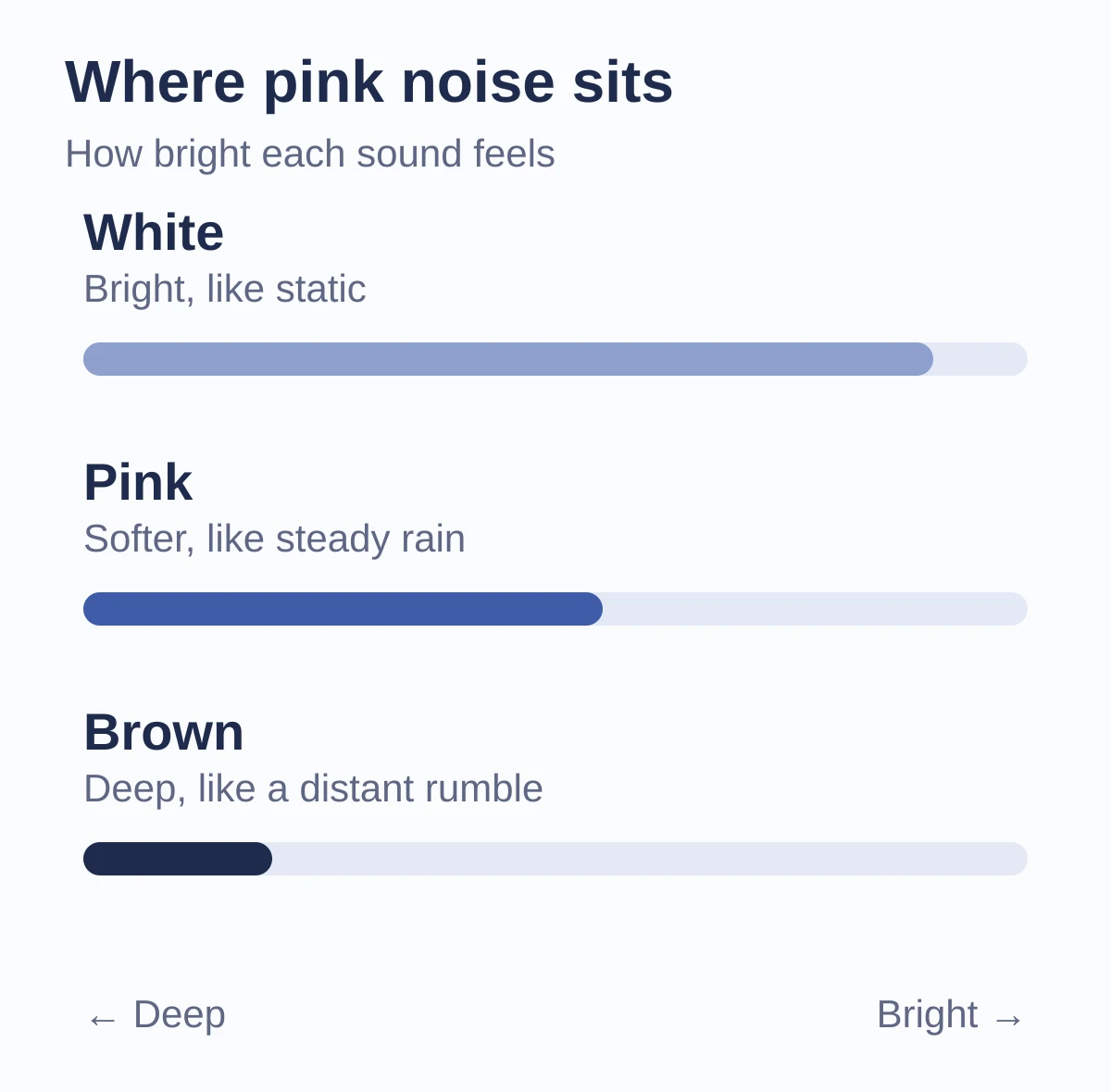
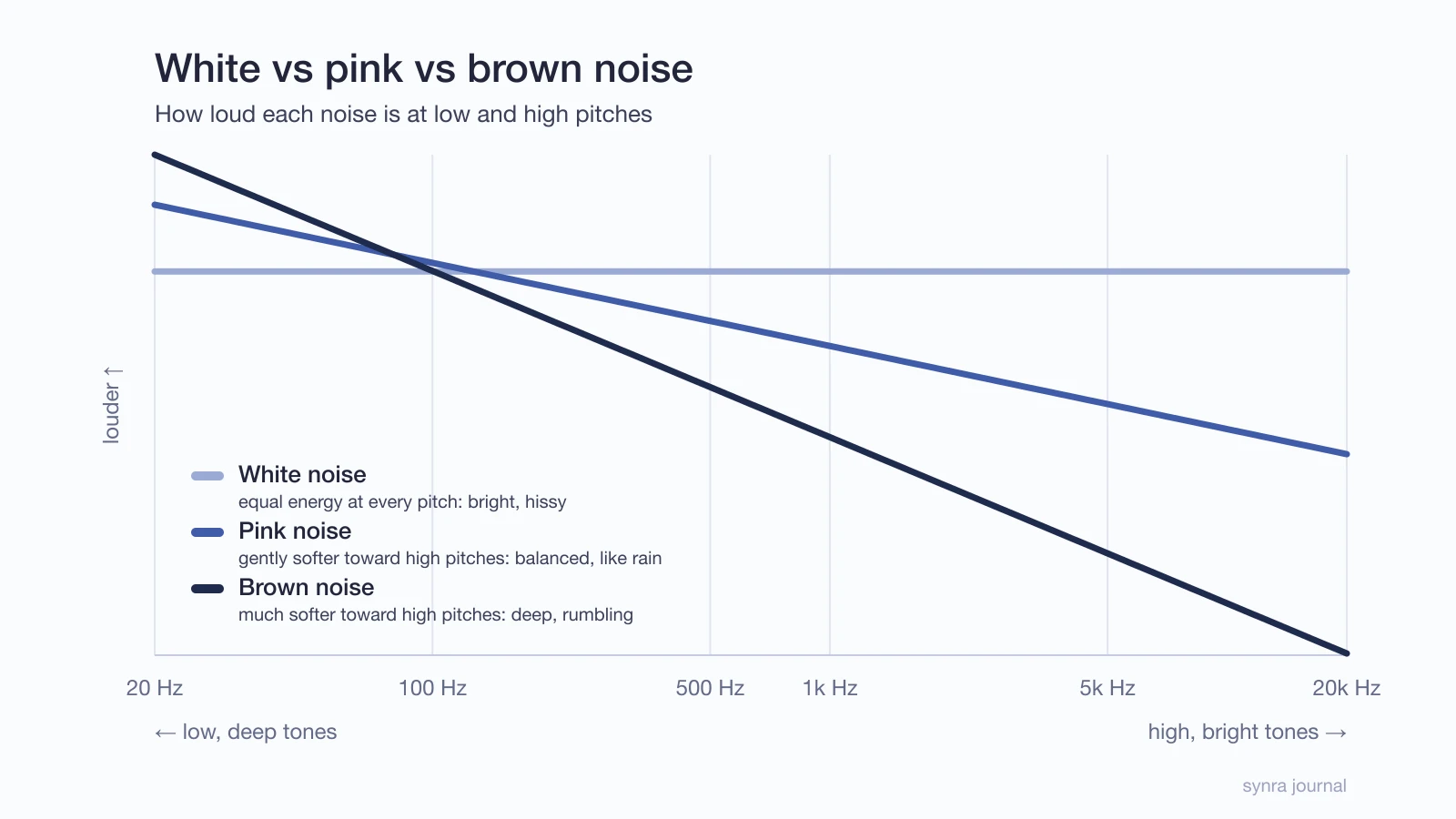
Pink noise sounds like steady rain or a gentle waterfall. The Sleep Foundation explains that its pitches get quieter as they rise, by 3 decibels with each higher octave. It adds that pink noise is often considered more relaxing than white noise because it is not as high-pitched.
White noise carries the same volume across all pitches, which gives it a static sound. Brown noise is deeper again. Pink sits in the middle.
Why might pink noise help with tinnitus?
When a room is silent, the ringing has the stage to itself. A soft, steady noise gives your ears something else to follow.
The American Tinnitus Association describes sound therapy as pleasant or calming sounds that diminish the presence of tinnitus. It says attention is limited, so sound can give quick relief. Its free masking sound library includes a 60-minute pink noise track.
The NIDCD says sound therapy may work by masking the ringing, helping you grow used to it, or distracting you. Pink noise can do any of these jobs.
What does research say about pink noise?
Most of the research looks at sound in general, not one colour of noise. One small study is worth knowing about, though. Mondelli and colleagues fitted adults aged 55 to 70 with hearing aids that had a built-in sound generator. They had tinnitus and mild or moderate hearing loss. Four groups each heard a different sound: white noise, pink noise, speech noise or a high-tone noise.
In every group, scores for how much the tinnitus bothered people went down. The authors concluded that the sounds were equally effective at easing tinnitus. In the pink noise group, the tinnitus questionnaire score fell from about 55 to about 12. Pink noise was also the only one with a clear gain in understanding speech in background noise.
The groups were small, about nine people each, and the sound came through hearing aids. So read it as an encouraging hint, not a promise. It does suggest a friendly rule: pick the sound you like best.
Pink, white or brown: which one first?
Use your own ringing as the guide. Here is a simple starting table.
| What you hear | Try first | Why |
|---|---|---|
| A high whistle or thin ring | White or pink noise | Bright tones sit close to a high ringing |
| A bright hiss that white noise makes sharper | Pink noise | Softer at the top, so less sharp |
| A low hum or buzz | Brown noise | Deep sound sits beside a deep ringing |
| Ringing plus a busy mind at night | Pink noise or rain | Steady and easy to drift off to |
Not sure how to describe your ringing? Our guide to what tinnitus sounds like can help you find the words. The player on this page lets you hear pink, white and brown noise side by side. Our free online tinnitus masker does the same on any device.
How loud should pink noise be?
Think "background", not "blanket". Tinnitus UK suggests a level a little quieter than your tinnitus most of the time. Covering the ringing completely can feel good in the moment. But Tinnitus UK says it does nothing to encourage long-term habituation, which means slowly getting used to the ringing.
The Sleep Foundation adds that the right level depends on your preference, your sensitivity and how noisy the room is. It also reminds readers to keep the volume at a safe level.
A quick way to set it:
- Start very low, so you cannot quite hear the noise.
- Nudge it up until the ringing and the noise blend together.
- Stop there. If you can no longer find the ringing at all, come down a notch.
Is pink noise a good bedtime sound?
It is a popular one, and the reason is easy to feel. Rain-like sound has no sharp edges, so there is little in it to keep your mind busy. Tinnitus UK says a relaxing sound can help if you struggle to get to sleep. Played low, it can also give your attention somewhere to go if you wake in the early hours.
A small bedside speaker is gentler than earbuds. A pillow speaker keeps things quiet for a partner. Add a timer that fades out, so the sound is there while you drift off. Our guide on how to sleep with tinnitus covers the whole bedtime routine.
What if pink noise does not feel right?
That is fine, and it tells you something useful. A sound that annoys you after a few evenings is not the one for you. Move one step in either direction. If pink feels dull, white is brighter. If it still feels thin, brown noise is deeper and warmer. Rain and flowing water are other gentle choices, and so is green noise, a soft mid-range sound that many compare to a stream, and our guide to tinnitus masking shows how to match a sound to your ringing.
How Synra can help with pink noise
We built Synra for evenings when static is too much and silence is worse. Open the Tinnitus Relief collection and you will find pink noise next to white, brown and green noise, with rain and flowing water for softer nights. A loudness slider lets you set it just under the ringing. Frequency intensity (Off, Low, Normal or High) changes how bright the sound feels, and a 10 to 60 minute timer fades it out as you fall asleep. It keeps playing with the screen off, and Backdrop Mode lets it run quietly beneath a podcast or music. The result is a calmer room and a ringing that stands out less. Our free 1-minute tinnitus quiz points you to the sounds worth trying first.
When to see a doctor
Please book a visit if any of these sound familiar:
- a beating or whooshing in time with your pulse (the NHS says to get an urgent GP appointment)
- tinnitus that started suddenly, or arrived with sudden hearing loss
- ringing in one ear only
- dizziness, ear pain or discharge
- tinnitus that is getting worse
- distress or poor sleep because of the noise
The NIDCD suggests starting with your primary care doctor, who can check for simple causes such as earwax. Sound can be a comfort while you wait for that visit.
A simple plan for tonight
- Press play on pink noise in the player above and keep it low.
- Raise it until it blends with the ringing, then ease back a little.
- Compare white and brown for two minutes each. Keep your favourite.
- In bed, set a 30-minute fading timer and put the speaker on the bedside table.
- In the morning, jot down one line: the sound, the level, the night.
Browse all our tinnitus guides for more ideas.
Common questions
Is pink noise good for tinnitus?
Many people find pink noise makes the ringing less noticeable, because it gives the ear a soft, steady sound instead of silence. The NHS advises against total silence, and the NIDCD says sound may mask tinnitus, help you get used to it, or distract you. Try it for a few evenings to see if it suits you.
What is the difference between pink noise and white noise?
White noise has the same volume at every pitch, so it sounds bright, like static. Pink noise gets quieter as the pitch rises, by 3 decibels with each higher octave according to the Sleep Foundation. That makes it sound softer and rounder.
Is pink noise better than white noise for tinnitus?
Not necessarily. In a small study of people using hearing aids with built-in sound generators, white, pink, speech and high-tone noise all eased tinnitus scores, and the authors found them equally effective. The best sound is the one you find pleasant and can live with.
Can I sleep with pink noise on?
Yes. Tinnitus UK says a relaxing sound can help if you have trouble getting to sleep, and a low sound left on can help if you wake in the night. A timer that fades out is a gentle way to start.
How loud should pink noise be for tinnitus?
Tinnitus UK suggests a level a little quieter than your tinnitus for most of the time. Keep it at a volume that is comfortable and safe for your ears.
Sources (6)
- Mondelli MFCG et al. Sound Generator: Analysis of the Effectiveness of Noise in the Habituation of Tinnitus. International Archives of Otorhinolaryngology, 2020
- Sleep Foundation: Pink noise
- Tinnitus UK (British Tinnitus Association): Sound therapy
- American Tinnitus Association: Sound therapy
- NIDCD (NIH): Tinnitus
- NHS: Tinnitus
More tinnitus guides

Which sounds suit your tinnitus? Take the free 1-minute quiz.
Free tinnitus quiz →Tinnitus quiz →