Brown Noise for Tinnitus: A Deep, Gentle Sound to Try
Brown noise is a deep, rumbling sound many people find easy on the ears. Learn how it may make tinnitus less noticeable and how to try it tonight.
By Synra Editorial Team · Updated · 5 min read
Some evenings a bright hiss is the last thing you want. You want something lower, like a far-off waterfall or a train humming past. That is brown noise, and it may be a gentler fit.
Brown noise is a deep, steady rumble that many people find easy to live with, and it can make tinnitus less noticeable by filling the silence. The NHS advises against total silence, because soft sound may distract you from the ringing. Brown noise is one soft sound to try.
Tinnitus masker
Sound is made on your device. Nothing to install.
Start quiet. Raise the level until the ringing just starts to blend in (the “mixing point”), not until it disappears. Keep the volume comfortable, especially with headphones.
What is brown noise?
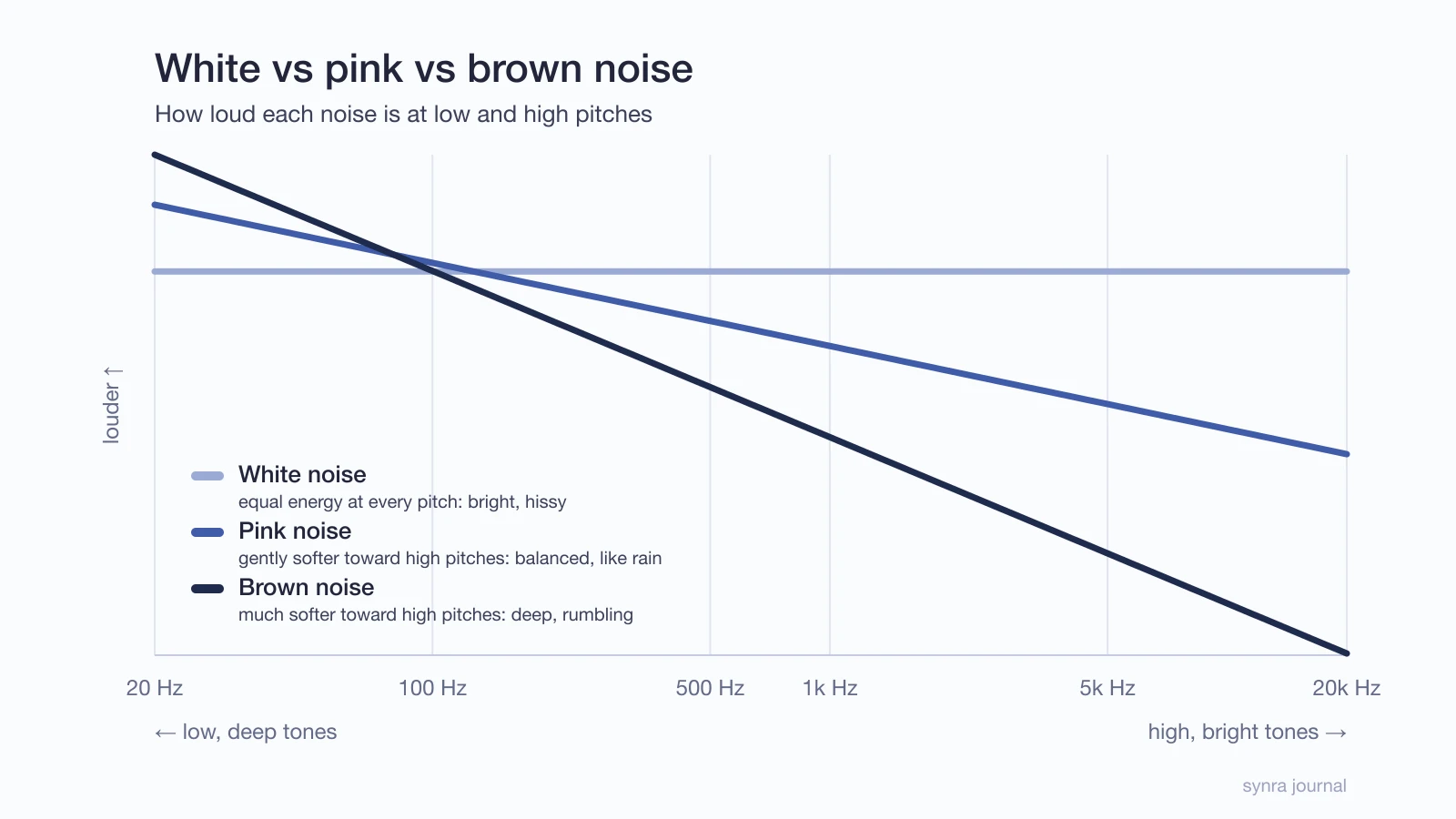
Brown noise sounds like a deep rushing, a rumble or a waterfall. The Sleep Foundation explains that its power drops as pitch rises, which gives it a deeper tone than white or pink noise. In research trials, it says, people compared it to rainfall or a shower.
White noise is even across all pitches, so it sounds like static. Pink sits in the middle. Brown is the deepest of the three. You may also see it called red noise.
Why might brown noise help with tinnitus?
Quiet rooms make ringing easy to notice. A soft rumble gives your ears another thing to follow.
The American Tinnitus Association says the brain can only focus on one thing at a time, so pleasant sound can bring quick relief. Its free masking sound library includes a 60-minute brown sound track.
The Sleep Foundation says studies have shown brown noise might be useful in reducing symptoms for people with ringing in the ears. That is a modest claim, so let us look at the study behind it.
What does the research say about brown noise?
Few studies compare colours of noise. One clinic study does. Barozzi and colleagues fitted 40 people with ear-level sound generators. Twenty could choose between white, red (which is brown) and pink noise. The other twenty used plain white noise.
Both groups improved on tinnitus questionnaires after 3 and 6 months. The type of sound made no significant difference. Two thirds of the people who could choose picked white noise. The rest picked red, because it reminded them of soothing sounds like a shower or rainfall. Nobody picked pink.
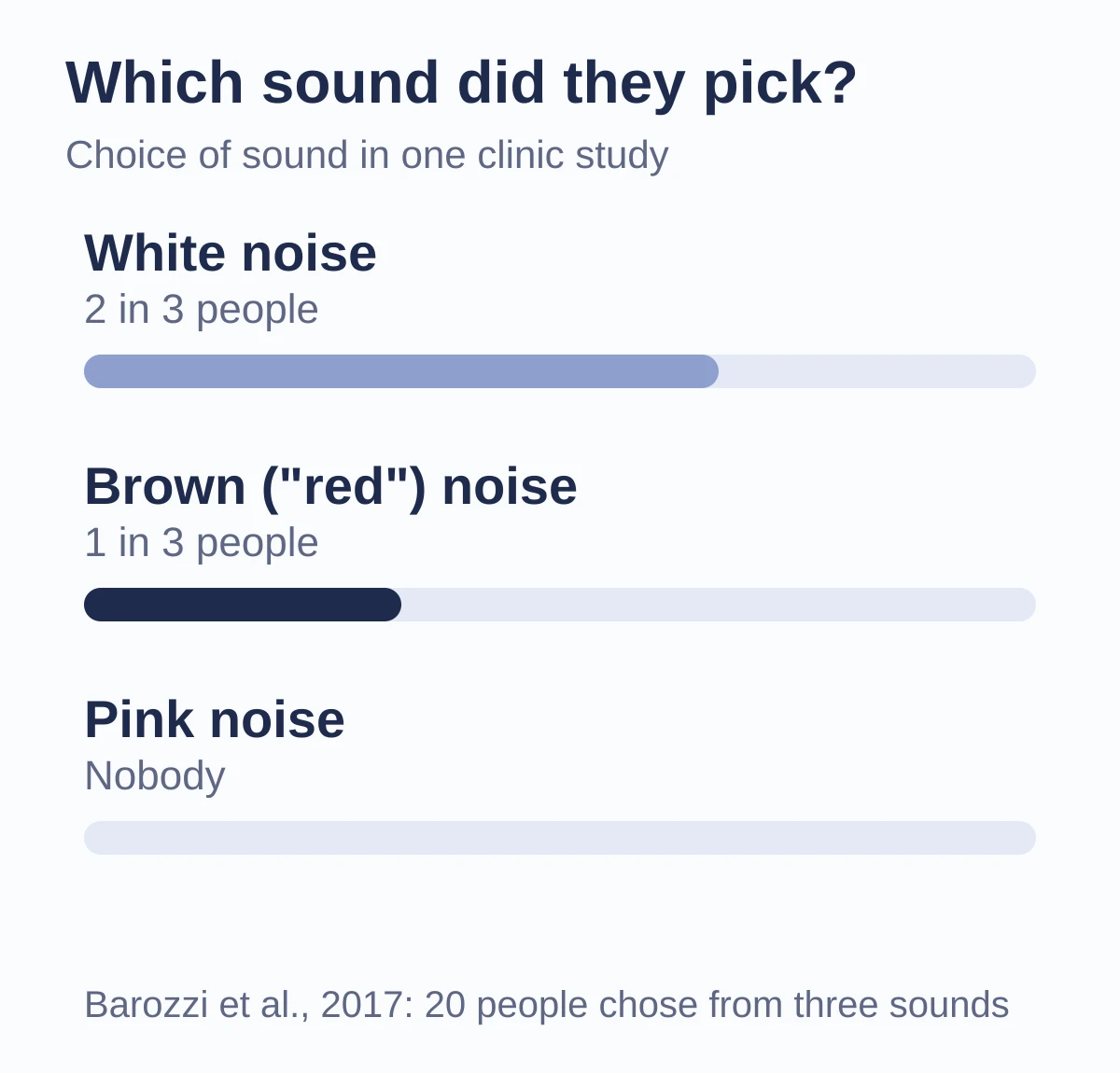
The authors say choosing a favourite after a short trial gave higher satisfaction. The groups were small and the sound came from ear-level devices, not a phone. Take it as a hint: sample a few sounds, then stay with the one you like.
Which sound should you try first?
Let your ringing and your taste lead. This table gives a starting point.
| What you notice | Try first | Why |
|---|---|---|
| White noise feels sharp or tiring | Brown noise | Deeper and softer at the top |
| A low hum or buzz | Brown noise | A deep sound sits beside a deep ringing |
| A high whistle or thin ring | White or pink noise | Brighter sounds sit closer to a high pitch |
| A busy mind at bedtime | Brown noise or rain | Steady, with few sharp edges |
Hard to put your ringing into words? Our page on what tinnitus sounds like may help. Press play on the player above to hear brown, pink and white in turn. Curious about the brighter end? Read white noise for tinnitus, or the middle choice, pink noise for tinnitus. The free online tinnitus masker works in any browser.
How loud should brown noise be?
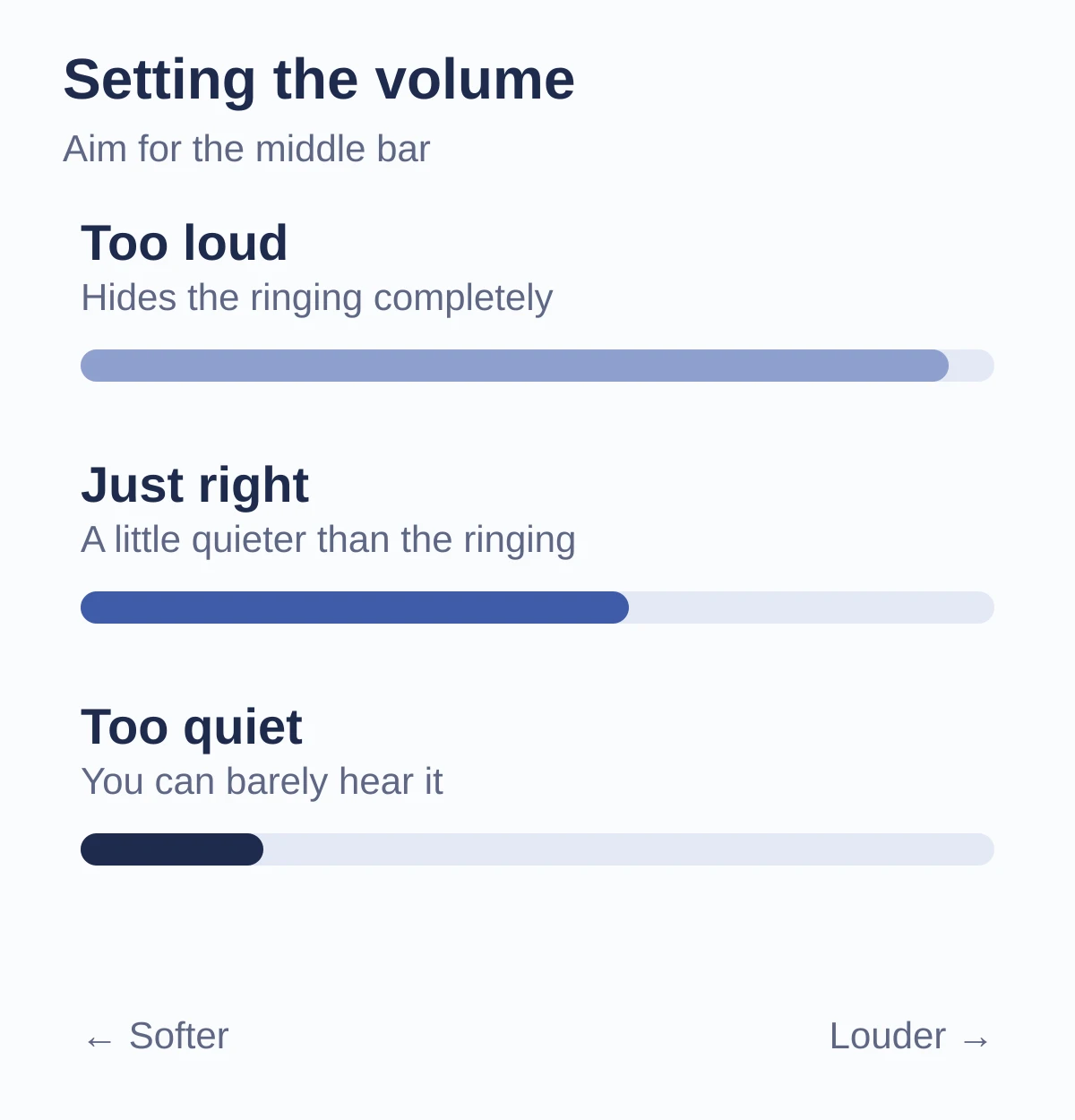
Aim for "background", not "blanket". Tinnitus UK says sound works best a little quieter than your tinnitus most of the time. Loud masking may feel good for a while, but it does little to help you get used to the ringing.
Deep sounds can seem soft while still being strong. The Sleep Foundation warns that long or repeated exposure to sound above 85 decibels can cause hearing loss. Comfortable is the goal.
To find your level:
- Begin so low that you can hardly hear the brown noise.
- Turn it up slowly until it melts into the ringing.
- Pause there. If the ringing disappears, turn it down one step.
Is brown noise a good bedtime sound?
Many people reach for it at night. Tinnitus UK says a calming sound can help when sleep is slow to come. Left on low, it also gives you something to listen to if you wake at 3 a.m.
Try a small speaker by the bed rather than earbuds. A pillow speaker keeps a partner undisturbed. Pick a timer that fades out, so the rumble is there as you drift off. Our guide on how to sleep with tinnitus covers the full evening routine.
What if brown noise does not feel right?
That is useful to learn. If it feels muffled or heavy, step over to pink or white noise. If rumble is not for you, rain, flowing water, a dawn chorus or the softer mid-range hush of green noise may fit better. Tinnitus UK says most people do best with a pleasant sound that does not demand attention. Our guide to tinnitus masking explains how to match a sound to your ringing.
How Synra can help with brown noise
Some nights need something deeper than static. In Synra's Tinnitus Relief collection, brown noise sits beside pink, white and green noise, plus rain and flowing water. Slide the loudness until the sound tucks just under your ringing. Set frequency intensity to Off, Low, Normal or High to make it rounder or brighter. A 10 to 60 minute timer fades the sound out as you fall asleep, and it keeps playing with the screen off. Backdrop Mode lets it hum beneath a podcast or your music. You get a quieter room and a ringing that stands out less. Take our free 1-minute tinnitus quiz to see which sounds to try first.
When to see a doctor
Please see a doctor if you notice any of these:
- a pulse-like beat or whoosh (the NHS says to ask for an urgent GP appointment)
- tinnitus that began suddenly, or came with sudden hearing loss
- ringing in only one ear
- dizziness, ear pain or discharge
- ringing that keeps getting worse
- distress, or sleep that suffers because of the noise
A soft sound can keep you comfortable while you wait for the appointment.
A simple plan for tonight
- Play brown noise in the player above, quietly.
- Raise it until it blends with the ringing, then back off a touch.
- Give pink and white two minutes each. Choose the one that feels kindest.
- At bedtime, set a 30-minute fading timer and rest the speaker nearby.
- Tomorrow, jot down the sound, the level and how you slept.
Browse all our tinnitus guides for more ideas.
Common questions
Is brown noise good for tinnitus?
Many people find brown noise a pleasant, easy sound that makes the ringing less noticeable. The Sleep Foundation says studies have shown brown noise might be useful in reducing tinnitus symptoms. The NHS advises against total silence, so a soft sound in the background is worth trying.
What is the difference between brown noise and white noise?
White noise has the same strength at every pitch, so it sounds bright, like static. Brown noise gets weaker as the pitch rises, so it sounds deeper, like a rumble or a waterfall. The Sleep Foundation says people in research trials compared it to rain or a shower.
Is brown noise better than white noise for tinnitus?
Not always. In a clinic study of 40 people using ear-level sound generators, both groups improved after 3 and 6 months, and the type of sound made no significant difference. Two thirds of those who could choose picked white noise, and the rest picked brown. The best sound is the one you like.
How loud should brown noise be for tinnitus?
Tinnitus UK suggests a level a little quieter than your tinnitus most of the time. The Sleep Foundation adds that long or repeated exposure to sound above 85 decibels can cause hearing loss, so keep the volume comfortable.
Can I sleep with brown noise on?
Yes. Tinnitus UK says a calming sound can help if you have trouble getting to sleep, and a low sound left on can help if you wake in the night. A timer that fades out is a gentle way to start.
Sources (6)
- Barozzi S et al. Effects of Tinnitus Retraining Therapy with Different Colours of Sound. International Tinnitus Journal, 2017
- Sleep Foundation: White noise
- Sleep Foundation: Noise and sleep
- Tinnitus UK (British Tinnitus Association): Sound therapy
- American Tinnitus Association: Sound therapy
- NHS: Tinnitus
More tinnitus guides
Which sounds suit your tinnitus? Take the free 1-minute quiz.
Free tinnitus quiz →Tinnitus quiz →