What Does Tinnitus Sound Like? A Guide
What does tinnitus sound like? Ringing, buzzing, hissing, humming and more. See the common sounds, why yours is different, and a soft sound to try first.
By Synra Editorial Team · Updated · 6 min read
You switch off the television and the room goes quiet. Then you notice it: a thin whistle, or a hiss, that was not there a moment ago. And you wonder if anyone else hears what you hear.
Tinnitus is most often described as ringing, but it can also sound like buzzing, hissing, humming, whistling, roaring, clicking or a whoosh. The NIDCD calls ringing the common description. It also lists roaring, buzzing, hissing, clicking and squealing. Whatever you hear, you are not alone.
Tinnitus masker
Sound is made on your device. Nothing to install.
Start quiet. Raise the level until the ringing just starts to blend in (the “mixing point”), not until it disappears. Keep the volume comfortable, especially with headphones.
The sounds people describe
There is no single "official" tinnitus sound. The NHS lists ringing, buzzing, whooshing, humming, hissing, throbbing, and music or singing. Tinnitus UK adds whistling and clicking.
You may hear one sound or a mix. Some people notice a high ring with a low hum underneath. Others hear a hiss like a kettle that never quite boils.
The right word is worth a minute of thought. It helps you describe the sound to a doctor, and it points you to a soft sound to listen to beside it.
Four ways it can differ from person to person
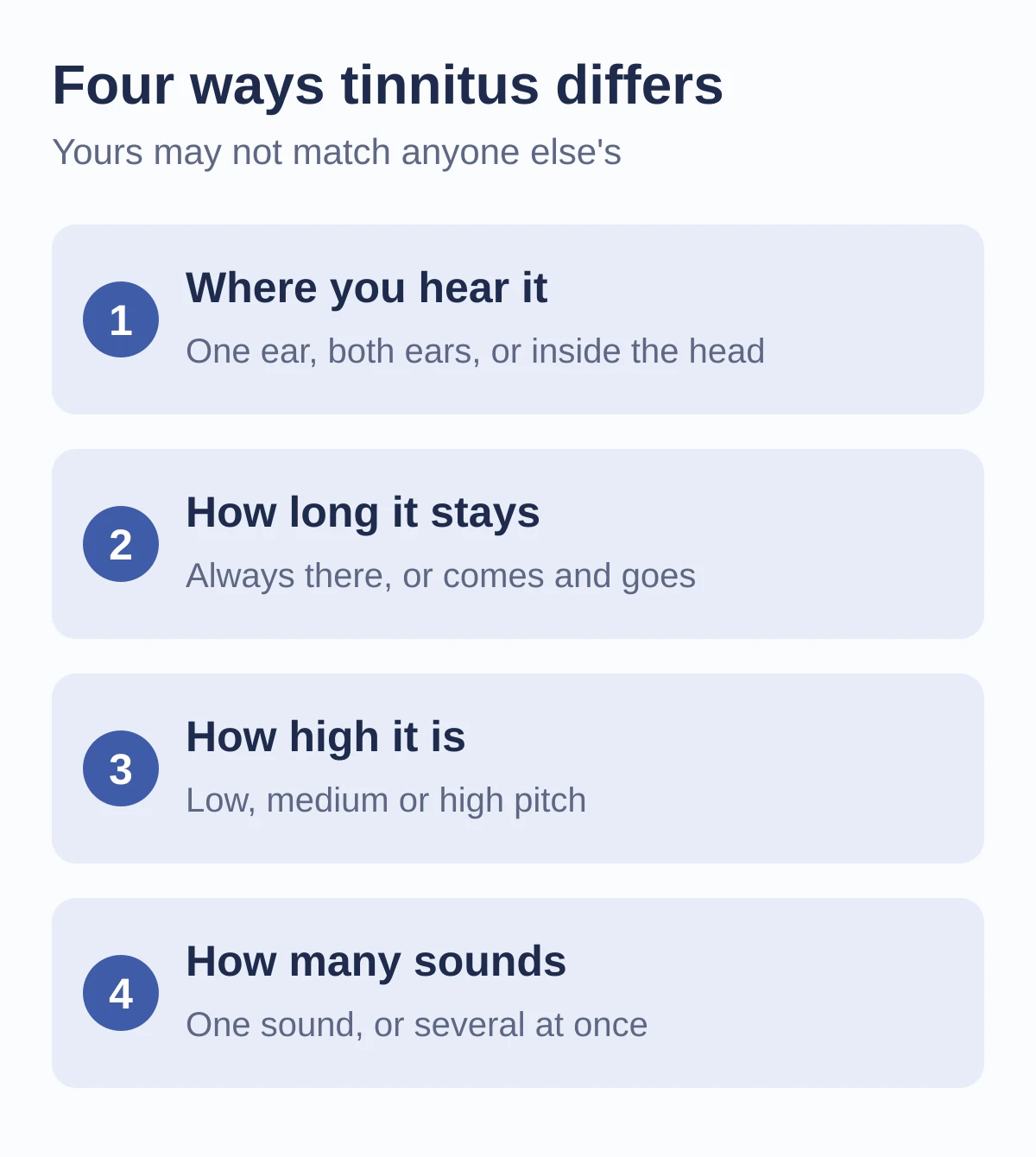
RNID explains that the pitch can be low, medium or high. You can hear one sound or several. It can seem to sit in one ear, in both, inside your head, or all around you. It may be there all the time or come and go.
Tinnitus UK puts it simply: tinnitus is unique to the person who has it. Your neighbour's ringing, and the clips you hear online, will not be a perfect match for yours.
It is also very common. Tinnitus UK says around one in three people have it at some point, and about one in seven have it for longer.
Rarer sounds you may not expect
A few descriptions surprise people.
- Music or tunes. RNID says tinnitus can occasionally sound like parts of songs. Mention it to your doctor if you hear this.
- Clicking. Clicks are on the NIDCD list of sounds. Very rarely, a doctor can hear the noise too. This is called objective tinnitus.
- A beat that follows your pulse. This is pulsatile tinnitus, and it is the one that needs a doctor's attention.
The American Tinnitus Association says that more than 99% of tinnitus is subjective, meaning only you hear it. Fewer than 1% is objective, with sounds from blood flow or muscle movement that others can hear too.
Which sound should you try first?
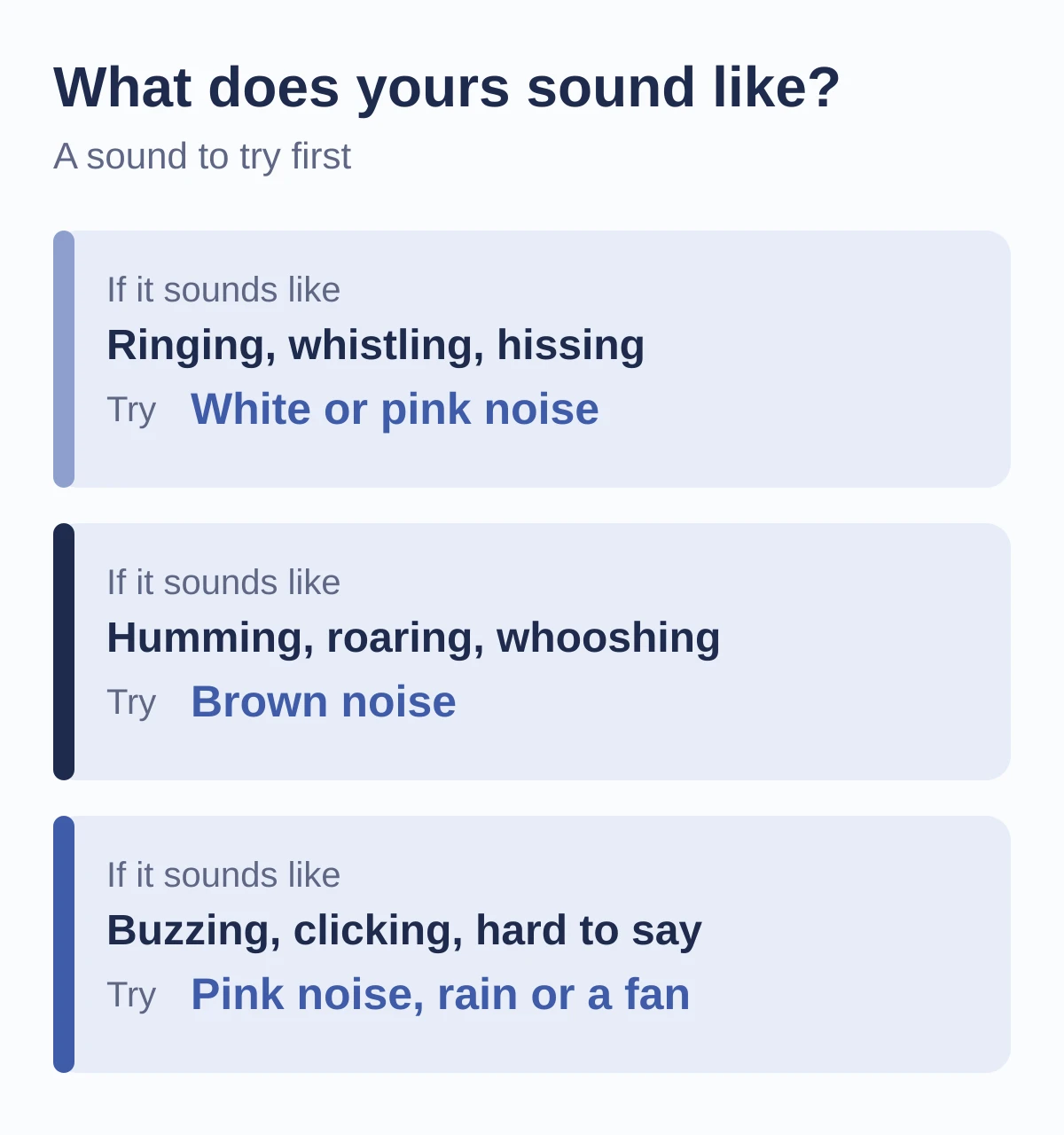
Many people find a soft background sound makes the ringing less noticeable. The NHS suggests listening to soft music or other soft sounds, and says to avoid total silence. The NIDCD says sound therapy can mask the ringing, help you get used to it, or draw your attention away. We explain this in more detail in our guide to tinnitus sound therapy.
Use this table as a starting point. Your own ears have the final say.
| What you hear | Try first | Why it can help |
|---|---|---|
| High ring, whistle or hiss | White or pink noise | Bright tones sit close to the ringing |
| Low hum, roar or whoosh | Brown noise | Deep tones blend with a low sound |
| Buzz, click or hard to say | Pink noise, rain or a fan | Soft and easy to listen to for hours |
Give each a few minutes. Keep the one that makes your ringing a little harder to pick out and that you could happily hear for an hour. The player on this page lets you compare noises with one tap. You can also open our free online tinnitus masker.
Keep the volume low. The aim is for the ringing to blend in, not to be drowned out. The same idea is explained step by step in our guide on how to sleep with tinnitus.
Can the sound change over time?
Yes. Tinnitus UK says it can be constant or come and go, and that its volume can change from one episode to the next. Many people notice it more when they are tired, stressed or somewhere quiet.
Here is the encouraging part. Tinnitus UK says most people find it improves over time. They describe tinnitus as brain activity that has moved out of its normal balance, rather than a disease. Getting used to it is a real and common path.
For background sound, Tinnitus UK suggests radio, music, or natural sounds such as birdsong or a river. Those cost nothing, so you could try one this evening.
How Synra can help with the sounds you hear
We built Synra for people who want a quieter relationship with their ringing. The Tinnitus Relief collection has brown, pink, green and white noise, plus rain and flowing-water sounds, so you can find the one that sits beside your own sound. A loudness slider lets you keep it soft. A timer from 10 to 60 minutes fades out gently, and the sound keeps playing with the screen off. With Backdrop Mode it plays quietly under a podcast or music. The ringing stands out less, and the room feels calmer.
Not sure which sound suits you? Our free 1-minute tinnitus quiz asks how your ringing sounds and when it bothers you, then suggests sounds to try first.
Describing your tinnitus to a doctor
A few plain words go a long way. Say whether it is high or low, steady or pulsing, in one ear or both. Say when you first noticed it, and what makes it louder or softer. Mention any dizziness or hearing change.
You do not need medical language. "A high whistle in my left ear that is worse at night" tells a doctor far more than "ringing". Keep a note on your phone for a few days if that is easier.
When to see a doctor
Most tinnitus is not a sign of anything serious, but get it checked if it:
- beats in time with your pulse (the NHS says to ask for an urgent GP appointment)
- started suddenly, or came with sudden hearing loss
- is in one ear only
- comes with dizziness, ear pain or discharge
- sounds like music or voices
- is bothering you, for example by affecting your sleep or concentration, or making you feel anxious or low
The NHS also says to see a GP if you have tinnitus regularly or all the time, or if it is getting worse. Your doctor can refer you to an ear specialist and a hearing test.
Your first ten minutes with sound
- Jot down what you hear in your own words: high or low, one sound or two, one ear or both.
- Open the player above and try white, pink and brown noise for two minutes each.
- Pick the one that makes the ringing blend in. Set it low.
- Let it play in the quiet moments, like the evening, so silence does not leave the ringing centre stage.
- If you notice a pulse-like beat, or any sign in the list above, book a doctor's visit.
Browse all our tinnitus guides when you want to go further.
Common questions
What is the most common sound of tinnitus?
Ringing is the sound most often described. Many people also hear buzzing, hissing, humming, whistling, roaring or clicking. You may hear one sound or several, and it can change from day to day.
Can tinnitus sound like music?
Yes, for a small number of people. RNID says tinnitus can occasionally sound like parts of tunes or songs. If you hear music or voices, mention it to your doctor so they can look into it.
Why is my tinnitus a whooshing or heartbeat sound?
A rhythmic whoosh that beats in time with your pulse is called pulsatile tinnitus. The NHS advises asking for an urgent GP appointment if this happens to you, so please do not wait.
Is tinnitus in one ear normal?
Tinnitus can sound like it is in one ear, both ears or inside the head. If it is in one ear only, or started suddenly, it is worth having it checked by a doctor to be safe.
Does the sound of tinnitus change over time?
It can. Tinnitus UK says it may be constant or come and go, and its volume can differ from one episode to the next. The same source says most people find it improves over time.
More tinnitus guides
Ringing in your ears? Take the free 1-minute tinnitus quiz.
Free tinnitus quiz →Tinnitus quiz →